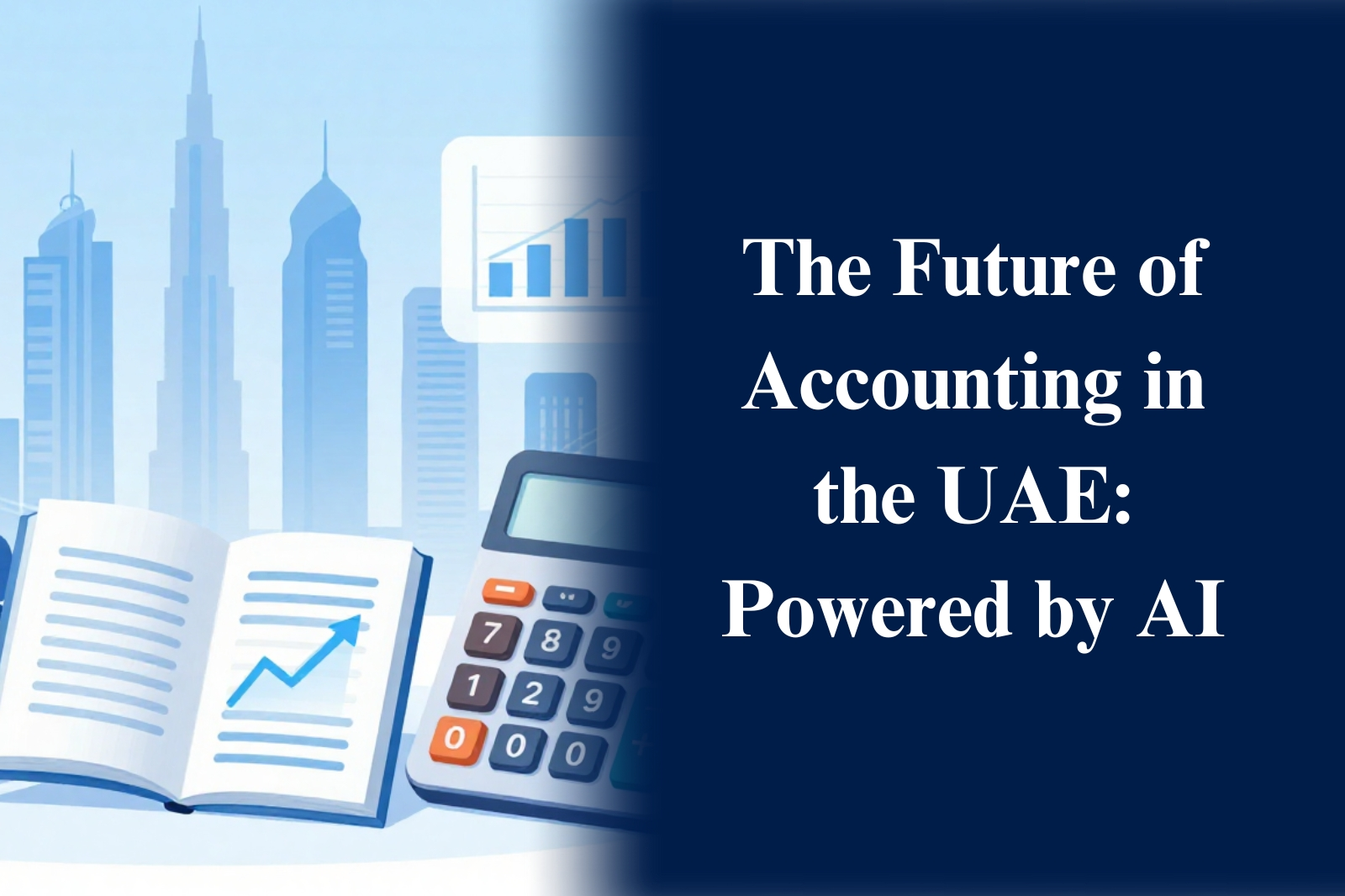


The question of how AI is changing accounting in the UAE is growing in importance, particularly with the UAE’s transition from a physical to a complete digital economy. The UAE is on an essential journey of change that Automation, data analytics, and AI are supporting. Accounting was traditionally performed manually based on paper, but is now moving towards being a compliance-focused and technology-driven activity. Several initiatives are driving changes in the UAE accounting including the UAE National AI Strategy 2031, digital tax systems introduced by the Federal Tax Authority and the implementation of a national E-invoicing system.
In addition, VAT filings, compliance regulations, and accurate filing deadlines are becoming increasingly difficult for accounting professionals throughout the UAE. While many companies continue to use manual data entry and reconciliation processes which may lead to errors and delays. AI technology helps to reduce these problems by enhancing accuracy and increasing productivity. AI tools allow accounting departments to utilize journal entries, provide real-time dashboards, and develop better reporting capabilities.
Artificial Intelligence’s Impact on Accounting in the UAE
AI is revolutionizing the future of accounting in the UAE through increased efficiency and accuracy, compliance, and improved business decisions. As organizations implement technology solutions, the finance department relies on intelligent technology solutions to assist them in managing their daily finance operations more effectively and efficiently. There are several ways in which AI is changing accounting in the UAE, which are highlighted below.
Instant Financial Data Availability
Artificial intelligence-powered dashboards have increased the timelines of financial data availability. With access to current economic data, business leaders can make informed decisions concerning the cash flow and the income activity of their business and have the ability to make faster and more accurate plans for their business.
Digital Processing of Accounting Records
Advanced Artificial Intelligence systems use optical recognition and machine learning to read invoices, sort expenses, and match payments. By using automated processes, accounting departments can reduce the manual input of data into their accounting system and also avoid the majority of the standard accounting data entry errors.
Ongoing and Accurate Tax Compliance
As the UAE moves towards digital tax reporting and e-invoicing, AI-powered tools assist companies with the accurate submission of their VAT requirements. AI-powered tools alert companies to errors, help companies monitor for compliance issues, and provide companies with a timely submission of their VAT tax returns.
Predictive Financial Analysis
AI evaluates a company’s financial records and analyzes transactions to predict payment delays, detect unusual transactions, and identify potential fraud risks. By conducting predictive financial analysis, companies are able to react early and protect their financial stability.
Major Uses of Artificial Intelligence in the UAE Accounting
Artificial Intelligence is used in nearly every aspect of financial activity within the UAE’s accounting industry. And the implementation of AI technologies has transformed how companies track records, reduce risks, and achieve compliance. AI tools offer assistance in all areas of business finance, including day-to-day bookkeeping and high-level financial analysis.
Automated Accounting Processes – How AI is Changing Accounting in the UAE
Today’s AI-powered systems are responsible for high-speed and accurate transaction recording and account reconciliation. In addition to creating financial records, these systems also classify expenses, post entries, and balance accounts on their own. It has resulted in accounting teams using more time to create cleaner and more reliable financials while simultaneously minimizing human error.
Advanced Fraud Detection – How AI is Changing Accounting in the UAE
AI has become an integral component of protecting companies from financial crime. By utilizing machine learning algorithms to examine large volumes of economic data, AI can help identify and monitor unusual behaviour and suspicious transactions within that data. The more data is processed using the technology, the more precise the fraud detection becomes.
AI Financial Forecasting and Trend Analysis – How AI is Changing Accounting in the UAE
AI can be used to analyze both the historical numbers and the current market to generate predictions regarding the future financial performance of businesses. Businesses can utilize the generated forecast for budget preparation, cash flow, and reaction to potential changes in the marketplace.
AL for Smart Tax Management – How AI is Changing Accounting in the UAE
AI technology can assist businesses with compliance with the UAE tax regulations. By applying the most current updates in tax regulations to transactions, AI will help companies avoid errors and heavy penalties for non-compliance.
AI for Efficient Audit Support – How AI is Changing Accounting in the UAE
AI can enhance auditors’ efficiency by analyzing large amounts of data and flagging those entries that appear abnormal. It allows the auditor to focus on the deeper analysis and evaluation of the risk associated with that data and, in turn, improve the overall quality and efficiency of the audit.
Why has Automation become Essential in the UAE Economy?
Businesses in the UAE now operate in a very fast-moving and changing fiscal environment. As the importance of speed, accuracy, and compliance increases, businesses are also experiencing significant increases in both the number of financial transactions they are performing and the number of digital regulations being implemented. Due to rapid growth, manual accounting processes will ultimately be unable to keep pace with these demands. Automation will provide businesses with a way to more efficiently manage all of their financial operations and create long-term support for growth and compliance.
Growing Demand for Digital Compliance – How AI is Changing Accounting in the UAE
The Federal Tax Authority has committed to creating a fully digital tax system in the UAE, which will require businesses to maintain machine-readable invoices. Financial records must be prepared and maintained in such a way that they are capable of being audited or accepted by both the authority and other external authorities, and prepare their VAT reconciliations through an automated process using a combination of these processes. It allows businesses to maintain compliance with all of the requirements of the digital tax system while minimizing the number of filing mistakes and delays.
Growing Volumes of Daily Financial Transactions – How AI is Changing Accounting in the UAE
Today, both large and small businesses are conducting more transactions on a daily basis than ever before. Manual methods of accounting typically slow down the business and increase the likelihood of errors. Automated accounting systems allow the processing of such a significant volume of transactions and maintain the accuracy of the financial records they create.
Transitioning from Traditional to Analytical Accounting – How AI is Changing Accounting in the UAE
Automation is now handling all of the routine aspects of accounting. Therefore, accountants in the UAE are spending an increased amount of time on tax planning, financial strategy, and performance improvement efforts, which allows them to create increased value to their respective businesses.
Key Benefits of Artificial Intelligence in Accounting – How AI is Changing Accounting in the UAE
As AI moves companies in the UAE forward from simply automating financial tasks to actually facilitating advanced management, the application of AI goes well beyond increasing efficiency. AI provides companies with enhanced control over their finances, better financial planning, and a greater capability for long-term growth. The list that follows identifies some of the many strategic advantages associated with using artificial Intelligence within an accounting department.
Scalable Financial Processing
AI allows finance departments to grow with the business. When volume increases, financial software can increase productivity at a lower cost. New companies in the UAE are developing and maintaining performance during busy periods.
Audit-ready Finance Environment
AI organizes financial information continually into structured digital formats. Having an established audit trail, system logs, and validated entries helps companies stay ready for internal and external audits at any time.
Improved and Enhanced Internal Controls
AL can apply configuration rules that govern financial processes with consistency. Using standard controls allows multiple departments to follow the same policies, reducing compliance variance and improving overall governance to meet UAE regulatory compliance requirements.
Integrated Systems Work Seamlessly
AI can integrate accounting systems with all business processes. With a single view of data, finance teams will have access to the same data when performing financial processes and reporting.
Increased Employee Productivity
AI can take out the repetitive nature of manual data entry. It allows accountants to grow their knowledge and develop additional skills to provide better analytical skills and become advisory to their clients. All new companies in the UAE are performing finance teams that focus on assisting businesses and will not be burdened with performing accounting-related tasks.
Data Driven Decision Making
AI takes raw financial data and turns it into structured, actionable insights that executive team members can use to assess their company’s performance and plan for growth and risk management with more confidence.
The Role of AI in Accounting in the UAE Through Al Riyady
With Al Riyady’s assistance, businesses in the UAE can now use the advantages of AI to improve their accounting processes. By implementing AI into basic activities, companies can automate their operational systems and provide an automated workflow for accounting activities, as well as access financial records with greater accuracy. Additionally, using AI tools gives business owners greater speed and accuracy when filing taxes, in particular through the use of tax tools and easy-to-read reports available through intelligent system integration.
Finale
AI is changing accounting in the UAE by making processes faster, more accurate and fully digital. As a result, businesses have an opportunity to reduce errors, ensure compliance with Value Added Tax (VAT) and other regulations, and access timely insights for improved decision making. The accounting department will no longer spend valuable time performing routine tasks related to data entry but will instead focus on development of strategic plans and providing advisory services.